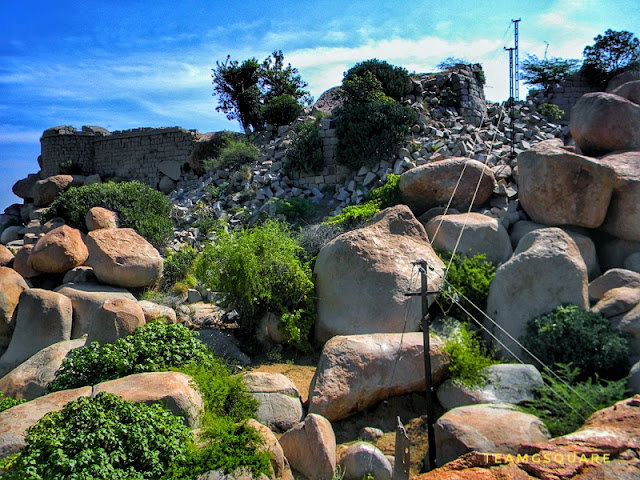
- Ramachandra Amatya (18th Century)
Forts are similar to our gated community and are built for to protect of the kingdom. The word 'Durga' (Fort in Kannada) originates from the Sanskrit word 'Durgam' meaning
'difficult to trespass', signifying the importance of a strategic site, a strong wall and a moat to make it an impregnable stronghold. The earliest reference to the fort can be found in Rigveda wherein a fortified city was referred to as a 'Pura'. According to Kautilya's Arthasthra, 'Fort' is the most significant aspect
of any kingdom, the others being it's King, Capital, Allies, Army, Ministry
and the Treasury. Forts have always played a significant role in shaping the history of the world. The history of fort itself dates back to the 6th century BCE with the earliest references of fortified cities being Nineveh and Babylonia. Harappa, Mohenjodaro, Lothal, Sisupalgarh, Hastinapur, Indraprastha, Dwaraka, Kishkinda, Malhar and Rajim are some of the earliest forts built in India, some of whose links can be traced to the Ramayana and the Mahabharata. Sisupalgarh is the oldest standing/surviving fort in India which is situated close to the city of Bhubaneswar in Orissa.
Satavahanas built the earliest of forts in Karnataka between the period of 1st
century BCE and 2nd century CE and their remnants have been found at
Sannati, Aihole, Banavasi, Sagar (Gulbarga), Chandravalli (Chitradurga), etc. However, the first confirmed record of fort as per inscriptions is the fort at Badami built around 543 AD by Pulakeshi I. In India, the Deccan (Maharashtra, Karnataka, Tamil Nadu and United Andhra Pradesh) undoubtedly dominates the other regions over the number of forts built. About 3000 forts were
built in this region of which majority of them still survive to narrate
their story. At present, about 700 forts survive in Karnataka. This post includes the list of forts we have visited till today, some of which have already been described by us in our previous posts (to which link has been given). Information with regards to the remaining forts will follow shortly in our subsequent posts.
 |
| Forts of Karnataka - ಕರ್ನಾಟಕದ ಕೋಟೆಗಳು |
There are many classifications of forts one of the most important Based on the type and area where the fort is built. Forts can be classified into 6 groups which are as follows:
1. Bhudurga or Nagardurga - City Fort or Land Fort - Bengaluru, Srirangapatnam
2. Giridurga or Parvatadurga - Hill Fort - Madhugiri, Chitradurga
3. Jaladurga - Fort surrounded by a Natural Water Body - Jaladurga, Malkhed
4. Dhanavandurga - Desert Fort - None in Karnataka
5. Mahidurga - Mud Fort - Gottam Gutta, Hangal
There are many great Kannada literary works which speak volumes about the construction of forts.
A few to name are as follows:-
1. 'Sivatatva Ratnakara' by Sri Basava Bhupala
2. 'Ananthnath Puran' by Sri Jana
3. 'Kumararamacharite' by Sri Nanjunda
4. 'Mohan Tarangini' by Sri Kanakadasaru
5. 'Pampaskhetra Vaaranam' by Sri Chandrakavi
6. 'Amulabasava Charite' by Sri Singi Rajan
7. 'Manasollasa' by Sri Someshwara III
8.' Dhadmanatha Purana' by Sri Bahubali Panditha
9. 'Vijayambudi Charite' by Sri Shrutikreethi
10. 'Chennabasava Purana' by Sri Virupaksha Panditha
11. 'Prabhulingaleele' by Sri Chamarasa and many more.
Forts of Karnataka:
1. Badami Fort - ಬಾದಾಮಿ ಕೋಟೆ
District: Bagalkot
Type: Giridurga
No. of tiers: 2
Dynasty ruled: Badami Chalukyas, Pallavas, Rashtrakutas, Kalyani Chalukyas, Hoysalas, Vijayanagar, Tippu Sultan
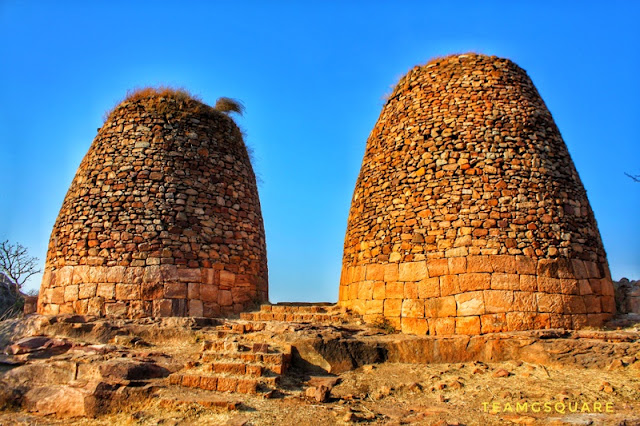 |
| Badami Fort |
District: Bagalkot
Type: Bhudurga
No. of tiers:2
District: Chikkaballapura
Type: Giridurga
No. of tiers:7
Dynasty ruled: Gangas, Cholas, Hoysalas, Vijayanagar, Kempegowda, Hyder Ali, Wodeyars, Marathas, British
 |
| Nandidurga Fort |
4. Shivagange Fort - ಶಿವಗಂಗೆ ಕೋಟೆ